
While many graphic designers can make a single page look highly attractive, true magazine publishing requires a much deeper technical skillset. Dean Cook explores the critical difference between a standard designer and a magazine production artist, why 'cheap' design often costs more in the long run, and the five essential questions every publisher should ask before making a hire.
While many graphic designers can make a single page look highly attractive, true magazine publishing requires a much deeper technical skillset. This guide explores the critical difference between a standard designer and a magazine production artist, why 'cheap' design often costs more in the long run, and the five essential questions every publisher should ask before making a hire.
Executive Summary:
- Beyond Aesthetics: There is a vast difference between a general graphic designer and a specialist magazine production artist who manages the entire technical workflow.
- The Hidden Engine: Reputable production artists use semi-automated processes, such as robust style sheets, to save time, maintain consistency, and properly support the editor.
- The Screen vs. Print Trap: What looks good on a monitor does not always translate to the printing press. "Cheap" design often lacks the rigorous technical standards required for commercial print.
- Output Intent: A professional will confidently deliver various, specifically calibrated PDF files depending on whether the final product is destined for the press or digital applications.
Not All Designers Are the Same
When launching or revamping a publication, one of the first questions a publisher asks is: "How do I find a reputable magazine designer?"
It is easy to assume that anyone who knows their way around layout software can put a magazine together. While many designers with commercial print experience certainly can design a magazine layout, there is a profound difference between simply placing text on a page and properly managing the wider production of a publication.
A standard graphic designer focuses primarily on aesthetics.
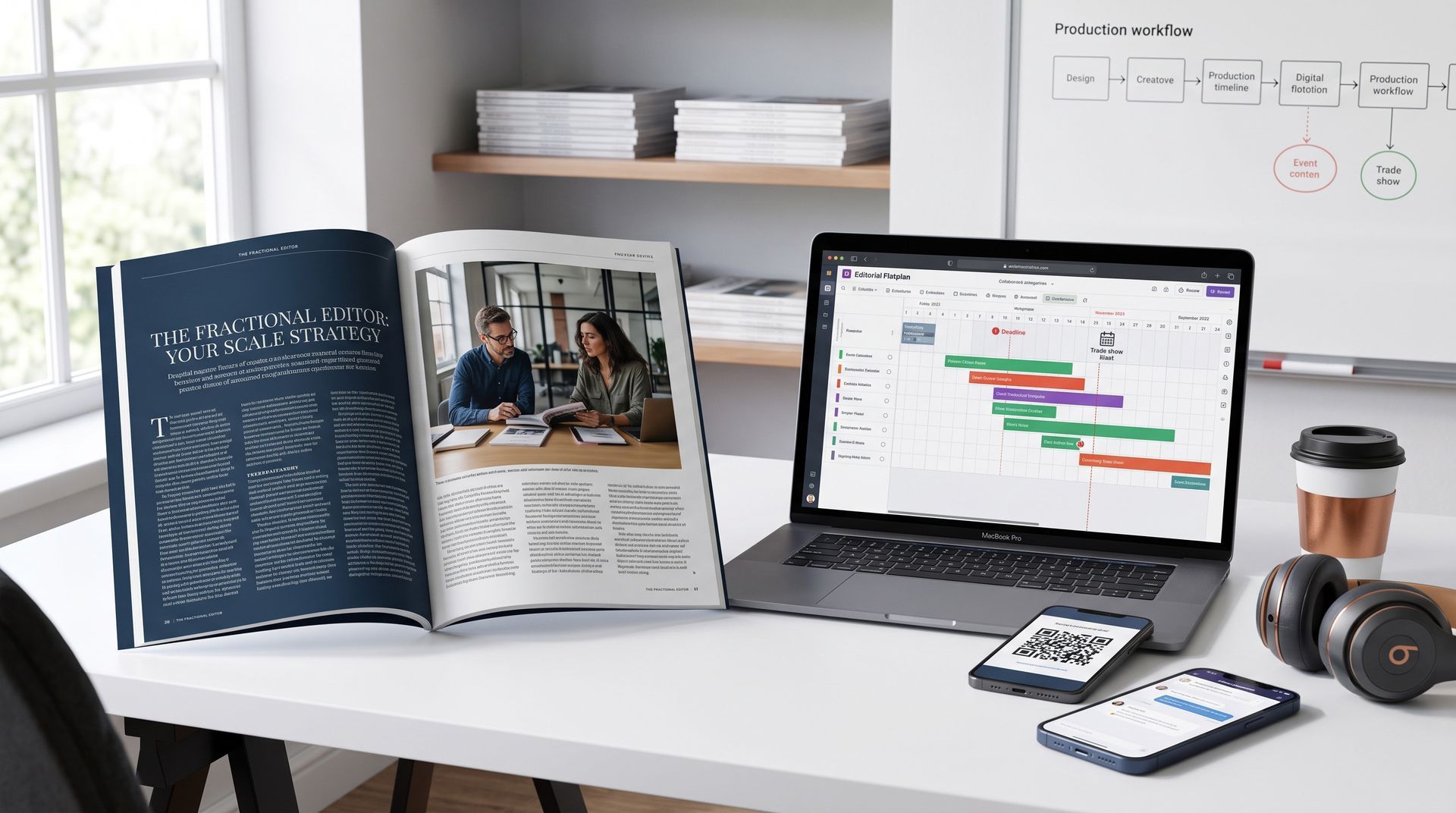
A magazine production artist, however, not only designs pages, they oversee the entire mechanical beast. They are the ones confidently taking raw content in, rigorously checking and handling supplied adverts, and providing structured proofs. As well as design, they manage the time, the technical workflow, communication, and offer unwavering support to the editor throughout the entire issue cycle.
The Engine Room: Style Sheets and Automation
A reputable production artist understands that building a magazine is an exercise in scale. They do not manually format every single paragraph or heading. Instead, they utilise semi-automated processes, heavily relying on meticulously constructed style sheets.
This technical architecture is crucial. It speeds up the layout process, guarantees absolute consistency across every page, and drastically reduces the margin for error. By programming the document to handle the heavy lifting, the production artist frees up vital time to focus on the finer details, ensuring deadlines are respected and the editor is fully supported when last-minute changes inevitably arise.
The True Cost of ‘Cheap’ Design
When browsing for design services, it is easy to be tempted by low prices. However, while there are many 'cheap designers' offering their services, a rock-bottom price often reveals a lot about their process.
A designer offering cut-rate pricing may have a genuine passion for aesthetics, but their eye is rarely on time management or the hidden technical standards of the document. The results can be poor, not necessarily in how the pages look on your monitor, but in the side of the process you cannot see: how the file is constructed.
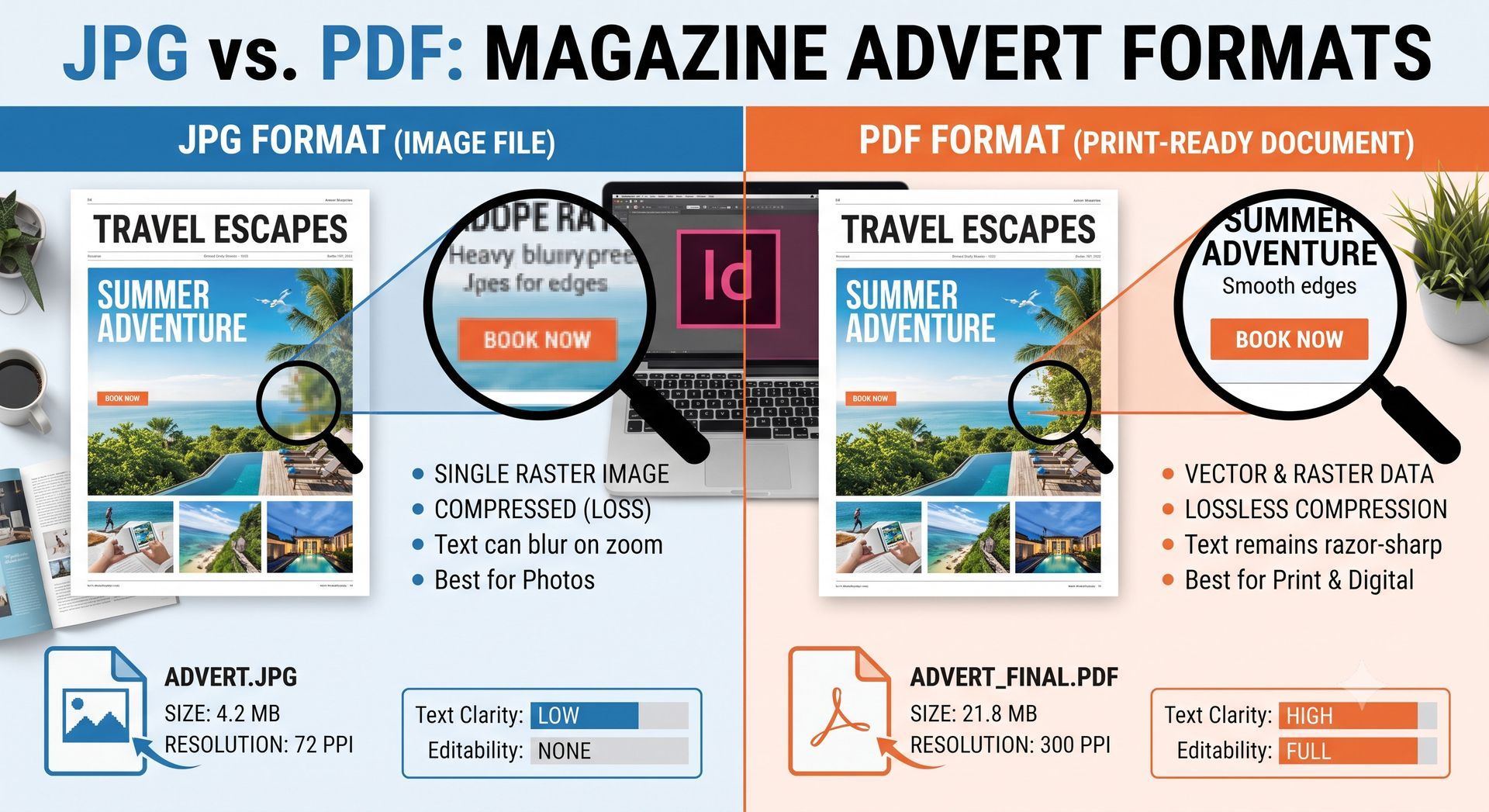
This leads to the ultimate trap for publishers. What you see on a bright, backlit RGB screen can differ wildly from what comes off a CMYK commercial printing press. If a designer does not understand ink weights, bleed tolerances, or high-resolution asset management, that 'cheap' design will quickly become a very expensive print error. A reputable production artist knows how to export the correct, technically compliant PDF files tailored exactly for their intended output — whether that is for a commercial printing press or a compressed, hyperlinked file for digital applications.
Five Key Questions Prospective Publishers Should Ask
To ensure you are hiring a professional capable of handling the rigours of magazine production, always ask these five questions:
- "How do you handle and pre-flight supplied advertising artwork?" (They should have a strict process for checking resolution, colour profiles, and fonts before placing adverts into the layout).
- "Do you use robust style sheets for layout automation?" (If they manually format text rather than using paragraph and character styles, they will cost you time and introduce inconsistencies).
- "Can you explain your proofing process and how you support the editor?" (Look for a clear, structured workflow that respects the editorial timeline and accommodates revisions without panic).
- "How do you ensure final files are technically compliant for commercial print?" (They must understand CMYK conversions, bleed, crop marks, and handling lossless image assets).
- "Do you provide separate, optimised outputs for digital and print?" (A print PDF and a digital PDF require entirely different export settings; a professional will provide both as standard).
Stopping the Search
Finding the right person to trust with your publication can feel daunting, but it does not have to be. If you are looking for a highly personal service, backed by decades of hands-on commercial magazine experience and cost-effective pricing, your search could stop right here. Drop us a line today to discuss how we can streamline your workflow and elevate your next issue.
Frequently Asked Questions (FAQ)
What is the difference between a graphic designer and a production artist? While a graphic designer focuses primarily on visual aesthetics, a production artist manages the comprehensive technical workflow of a publication. This includes asset management, advert verification, typography automation, and ensuring the final files meet strict commercial printing standards.
Why does my magazine look different in print than it does on screen? Screens display colours using light (RGB), while commercial printers use ink (CMYK). If a designer does not properly convert, colour-balance, and pre-flight the document for press, the printed result can look muddy, dark, or entirely different from the digital proof.
What are style sheets, and why are they important? Style sheets are programmed rules within layout software that dictate exactly how text and elements should look. They allow a production artist to semi-automate the formatting process, ensuring flawless consistency across the entire magazine while saving hours of manual adjustment.
The post 'How to Find a Reputable Magazine Designer: Why Production Expertise Matters' appeared first on
The Magazine Production Company.
Click here to go back to the main articles page.
Share this content!
Read more of our articles