
In this industry guide, media production specialist Dean Cook examines the operational bottlenecks of running periodic publications. Addressing publishers of bi-monthly and quarterly titles who require elite journalism and sub-editing but cannot justify a full-time internal salary, he breaks down the strategic advantages of plugging a ready-made, fractional B2B editor into a professional print and digital workflow.
In the independent publishing sector, managing the production cycle of a bi-monthly or quarterly magazine presents a highly specific operational riddle.
On one hand, your publication’s authority and commercial survival hinge entirely on the calibre of your written word. The expertise required to curate, write, and sub-edit an issue must be world-class to command reader trust and attract premium advertisers. On the other hand, the math simply does not add up for a full-time hire.
Paying a fixed, month-in, month-out salary for an internal editor makes zero financial sense when you only print four or six times a year. Yet, attempting to handle the entire editorial burden yourself — or scrambling to patch together unreliable freelancers every couple of months — creates a massive operational bottleneck.
The most viable, commercially sound route to scaling a periodic publication is plugging into a ready-made B2B fractional editor. By leveraging a seasoned professional who brings a built-in network of specialist literary talent, you secure elite industry expertise exactly when your production cycle demands it, without a single penny of wasted overhead.
1. The Periodic Dilemma: High-Level Need vs. Fractional Workload
Bi-monthly and quarterly titles are deep-dive publications. Because they sit on coffee tables or desks for longer periods, readers and sponsors expect an exceptionally high standard of long-form articles and features:
- Specialist Feature Journalism: Sourcing original, authoritative content that generalist AI tools or amateur writers simply cannot replicate.
- Commercial Copywriting: Crafting polished, high-converting advertorial pieces that satisfy your tiered commercial partners and sponsors.
- Rigorous Sub-Editing: Refining raw copy for tone, pace, clarity, and legal safety before it ever nears a design grid.
This requires a vast spectrum of literary talent. Expecting a single internal generalist to possess all these skills is unrealistic — and hiring a full team is financially impossible for a lower frequency schedule.
2. The Forward Planner: Mapping Themes to Trade Events
A premium, ready-made fractional editor does not simply react to the immediate, upcoming deadline; they look six to twelve months down the line. For a bi-monthly or quarterly publication, the entire commercial calendar often revolves around key annual trade shows and industry exhibitions.
A seasoned editor designs a long-range editorial plan that acts as a powerful commercial lever for your business:
- Show Previews & Exhibitor Spotlights: Developing dedicated feature sections months in advance, giving your sales team a high-value asset to pitch to event exhibitors who want to build footfall before the doors even open.
- On-the-Floor Journalism & Post-Show Reviews: Coordinating on-site reporting during the event and structuring comprehensive post-show reviews for the subsequent issue, ensuring your title becomes the definitive archive of record for the industry's major milestones.
- Cohesive Thematic Architecture: Engineering distinct, issue-by-issue themes that align with broader market trends, allowing columnists and commercial sponsors to craft highly relevant, contextual content that resonates deeply with the reader base.
3. The Solution: The Plug-and-Play Editorial Desk
Outsourcing your editorial leadership to a ready-made B2B expert isn’t about surrendering control — it is an exercise in strategic asset allocation. It provides your publication with immediate operational advantages:
- Instant, Curated Expertise: Instead of spending weeks vetting unproven contractors on public job boards, you inherit an established editor who seamlessly manages the workflow and pulls in proven specialist writers as needed from day one.
- Zero Payroll Burden: You gain fractional access to an elite editorial director without the burden of full-time salaries, pensions, national insurance, or equipment costs.
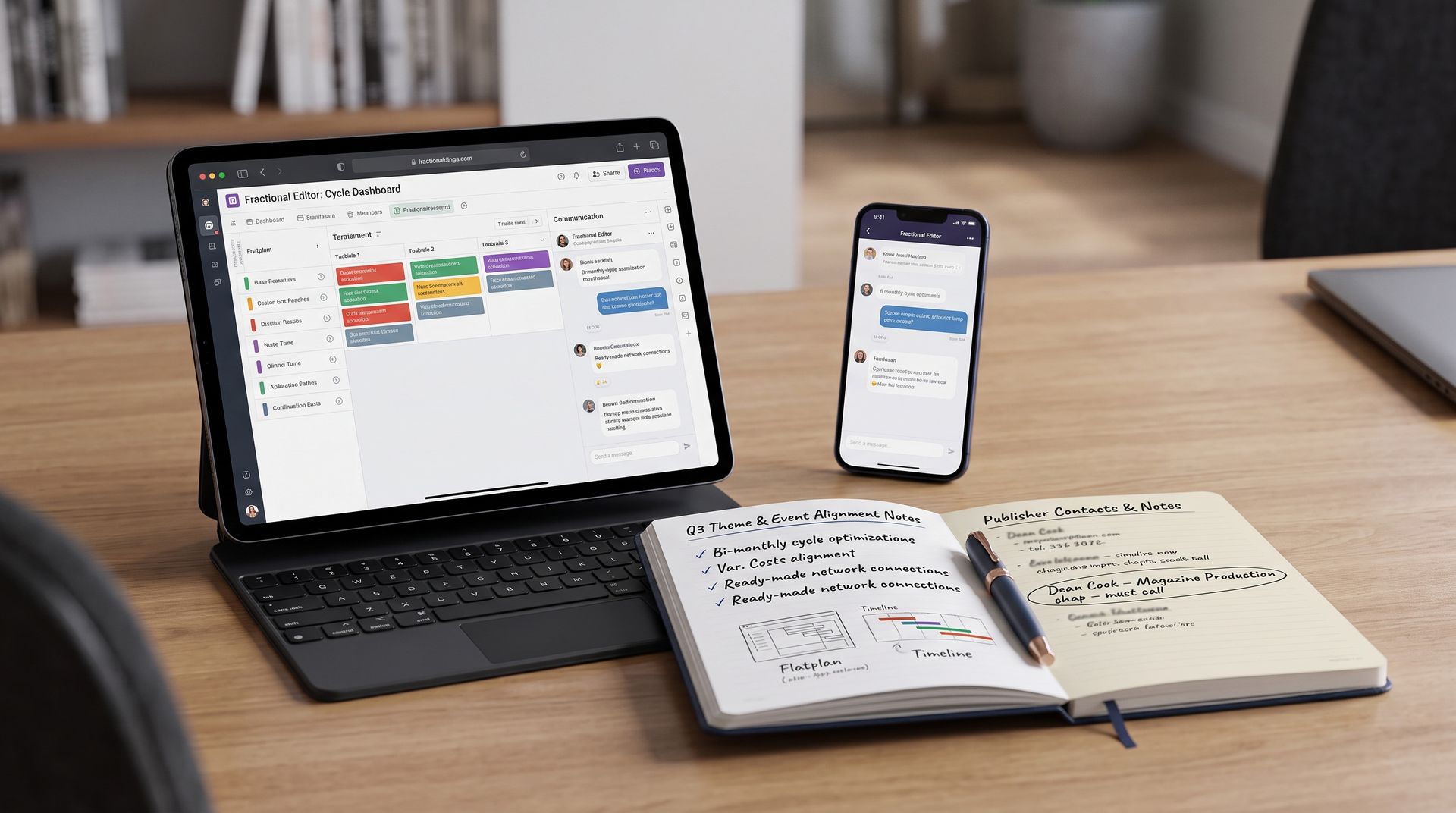
- Variable Cost Alignments: Your editorial expenditure scales in perfect harmony with your magazine’s exact cycle. When your flatplan is active and layout production begins, your editor is fully engaged. During the off-cycle weeks, your payroll expenses drop to absolute zero, protecting your commercial margins.
4. A Unified Production-Editorial Ecosystem
The ultimate workflow efficiency is achieved when your outsourced editorial pipeline is directly hardwired into your magazine production partner.
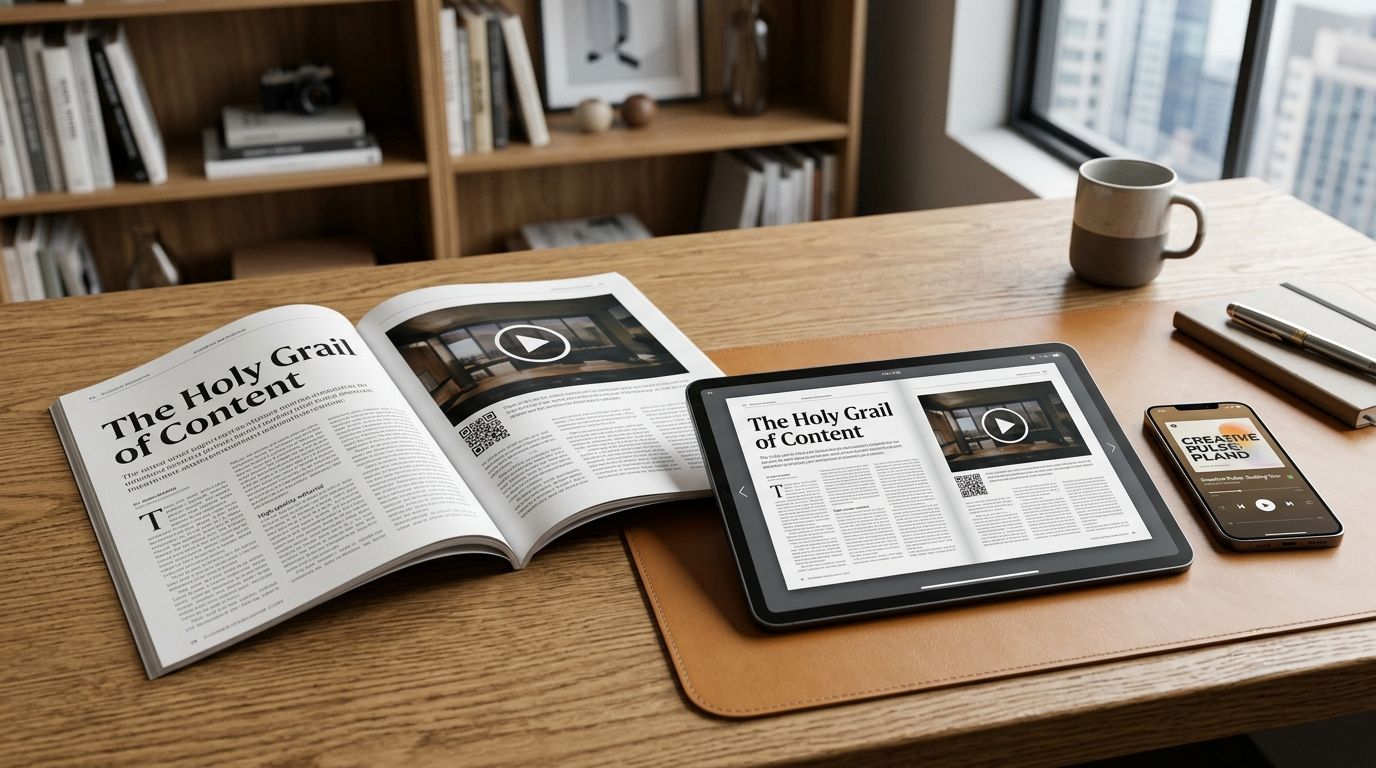
As a professional publication production collective, we don’t just engineer pristine, press-compliant print layouts and interactive digital hybrid issues — we actively provide the missing editorial engine. Because we operate at the centre of the industry, we maintain a highly vetted, ready-made network of B2B freelance editorial professionals steered by seasoned editors.
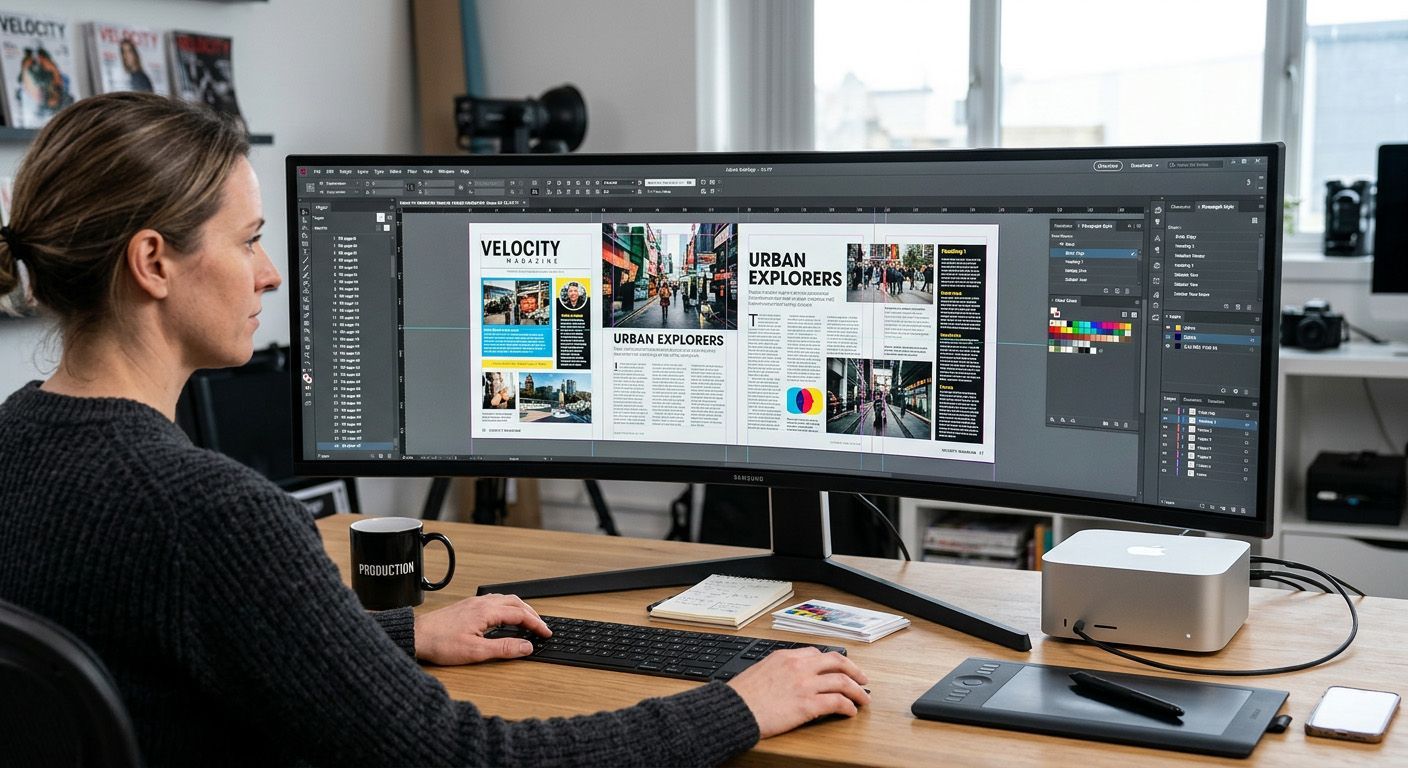
When you partner with us for your design and prepress architecture, you gain a seamless gateway to a turnkey editorial desk. We can immediately point you toward a trusted editor who understands tight publication deadlines, operates as a seamless extension of our workflow, and delivers clean, balanced copy pre-engineered to drop flawlessly into an automated InDesign production environment.
The Verdict: Shifting From Content Creator to Media Director
Your primary job as a publisher is to steer the strategic direction of your brand, cultivate high-value partnerships, and scale your audience community. You cannot grow a media business if you are perpetually buried under unedited text documents or chasing late copy.
By trusting your layout engineering to a dedicated production collective and plugging into a vetted, ready-made fractional editor, you build your publication on a bulletproof, institutional foundation. You eliminate the operational friction, elevate your brand’s authority, and ensure your magazine is produced to the highest commercial standards — on time, every time.
The post 'The Publisher’s Lifeline: How to Plug In a Ready-Made Editor for Less Frequent Titles' appeared first on
The Magazine Production Company.
Click here to go back to the main articles page.
Share this content!
Read more of our articles