
In this guide, magazine production specialist Dean Cook examines the financial and operational realities of independent publication design. Addressing publishers who have the basic skills to manage their own layouts, he breaks down the hidden costs of keeping production in-house and demonstrates why outsourcing to a dedicated professional collective is the most viable route to scaling a magazine business.
🎧 Short on time? Listen to co-hosts Alex and Sam break down the real costs of DIY publishing and the mechanics of the hybrid issue in this quick audio briefing.
When you are launching or scaling an independent magazine or newspaper, control is everything. If you possess basic design skills, a working knowledge of Adobe InDesign, and a passion for your subject matter, the temptation to handle your own page layouts is incredibly strong. On paper, the logic seems sound: “If I do the layout myself, I save money.”
But as your publication grows, a critical question shifts from a matter of capability to one of commercial viability: Just because you can design it yourself, does it make financial sense to do so?
When you audit the true cost of your time against the precision required for commercial printing standards, the DIY approach frequently transforms from a cost-saving measure into a major operational bottleneck. Here is how to evaluate whether it’s time to move from a solo in-house operation to a professional production partnership.
1. The Hidden Drain: Assessing the Value of Your Time
The biggest mistake independent publishers make is calculating production costs purely in terms of software subscriptions and asset expenses. They completely leave out the cost of their own time.
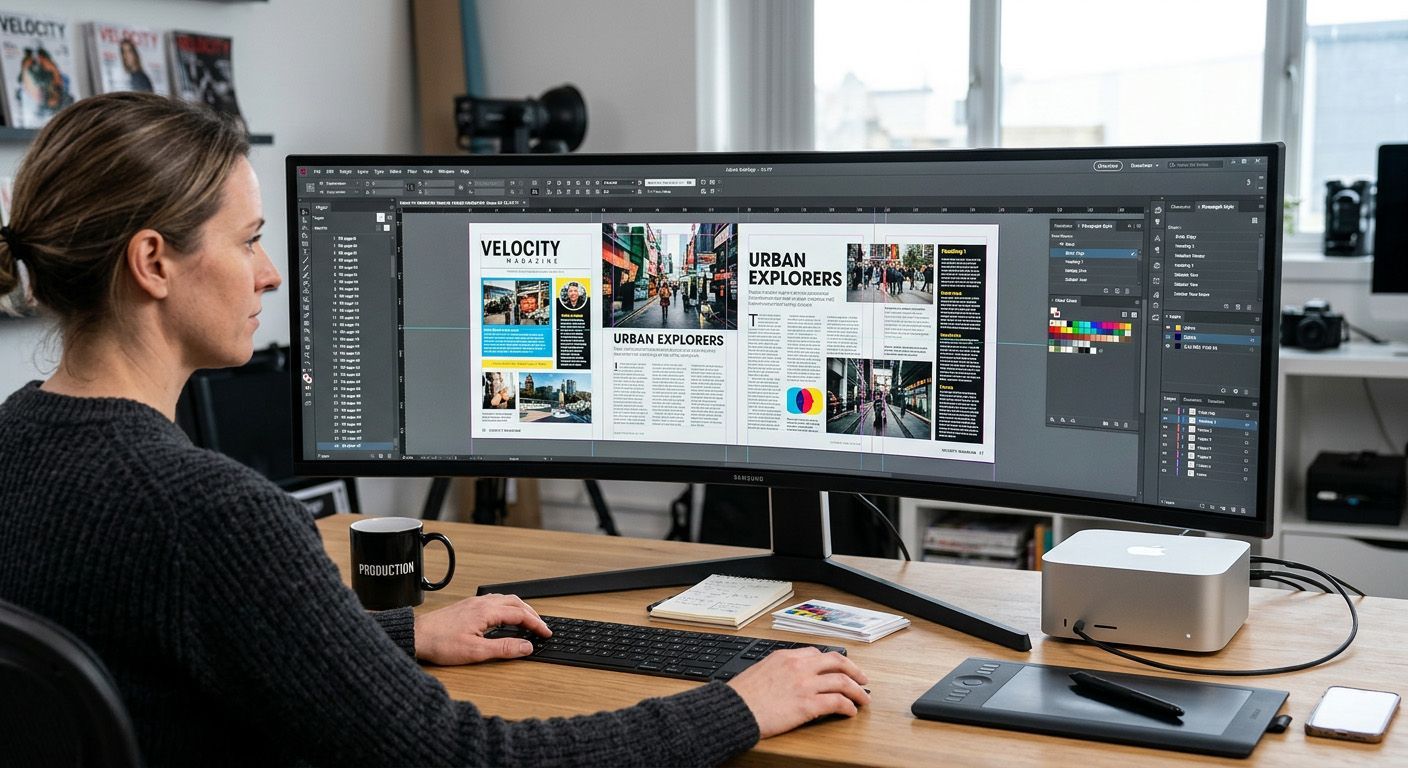
Managing a 64-page or 100-page editorial layout isn’t just about dropping text into a text box. It involves hours of meticulous font management, micro-typography, white-space balancing, and paragraph styling.
- The DIY Trap: If you spend 30 hours wrestling with page geometry, text reflows, and image links, those are 30 hours you are not spending selling tiered annual ad packages, speaking to sponsors, or building your multi-channel community.
- The Viability Shift: Your primary value as a publisher lies in business development, editorial direction, and community growth. When you tax your time with production tasks, you are essentially working as a low-wage layout artist inside your own business, capping your growth potential.
The Canva Trap: Just because you can, doesn't mean you should
- If you are considering using Canva or a similar generic design package to lay out your publication — don't do it! While these template-based platforms are fantastic for a quick social media graphic or a simple digital flyer, they are fundamentally unsuited for commercial, multi-page publication production. They lack the sophisticated typography engines, nested master page hierarchies, and precise grid systems required to lay out editorial copy professionally. Worse still, they do not offer the granular prepress controls needed to export a press-ready file. Relying on them almost guarantees layout shifts, muddy low-resolution images, and a document that a commercial printer would likely reject outright.
2. Production Disciplines: Prepress Compliance and the Risk of Print Errors
Basic layout skills are fantastic for digital teasers, but the commercial printing press is an entirely unforgiving environment. Professional publication production requires strict technical compliance before files ever reach the press room.
A dedicated production collective ensures your artwork meets exacting industry standards right out of the gate:
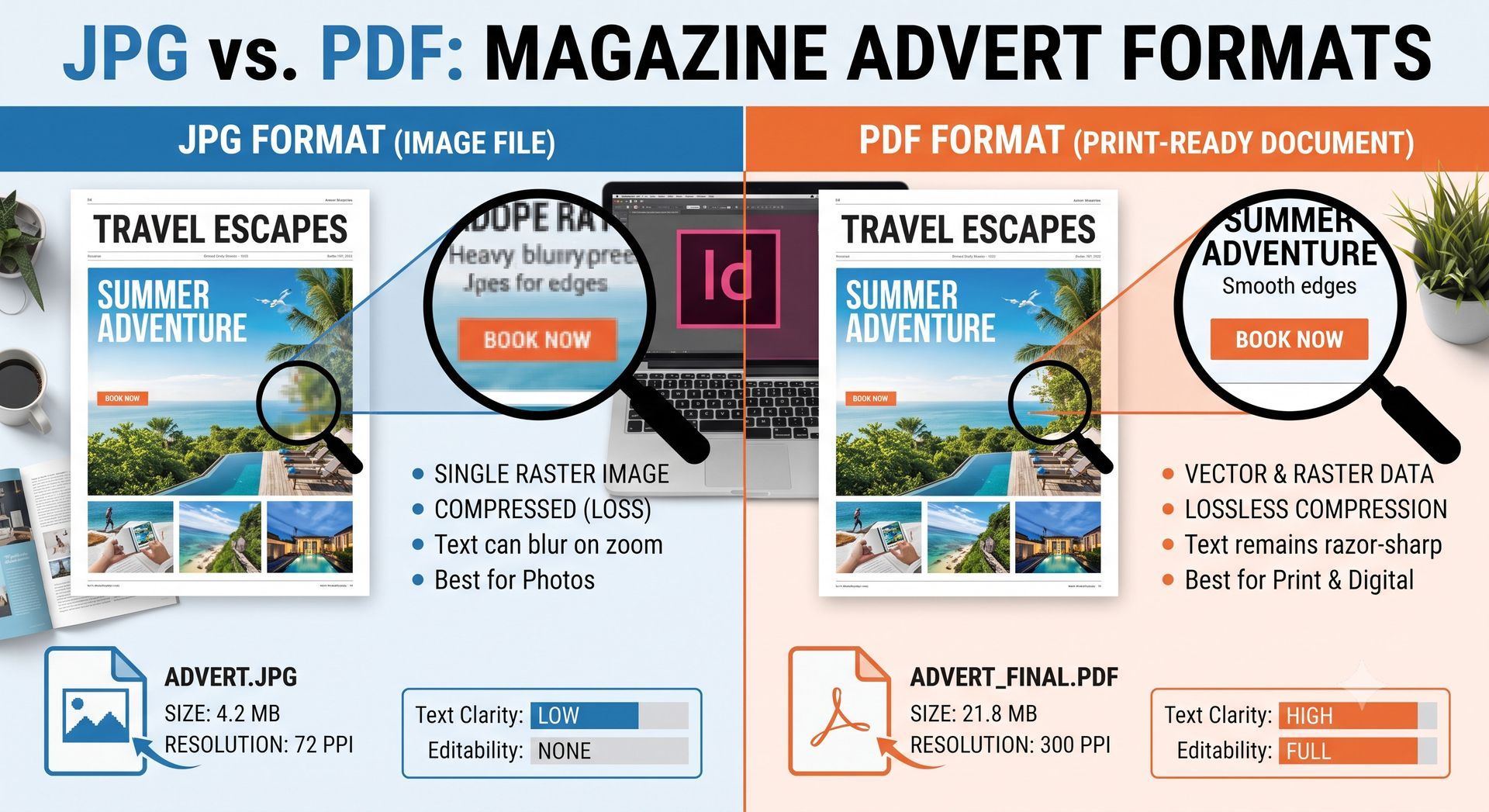
- Colour Space Precision: Seamless conversion of RGB client assets into true, uncompressed 300ppi CMYK profiles to avoid muddy or inaccurate print colour presentation.
- Geometry Accuracy: Flawless application of trim marks, document dimensions, and safe text zones to eliminate page-edge cutting errors.
- GREP and Script Automation: Utilising advanced custom scripts to instantly clean up imported copy—eliminating double spaces, bad punctuation breaks, and orphan headings page by page.
3. The Hybrid Issue: Master Engineering for 'Design Once' Efficiency
A common misconception among publishers is that creating both a print edition and an interactive digital version requires two completely separate, time-consuming design cycles.
A professional production artist avoids this duplication of effort through a workflow defined as the hybrid issue. Instead of separate paths, a single master layout is engineered to serve both channels simultaneously:
- The Single-Design Edition: The publication is designed once, establishing a unified layout that commands visual authority on the page and the screen alike.
- The Print Output: From this master file, a technically compliant, uncompressed 300ppi CMYK PDF is exported—flawlessly prepared with the precise trim marks, bleed boundaries, and colour spaces required for commercial printing systems.
- The Digital Derivative: From that exact same master file, an interactive, lightweight RGB PDF is generated for digital publishing. During the design process, the production artist embeds active hyperlink networks behind the text, attaches multimedia triggers, and converts visual QR codes into direct, clickable web links.
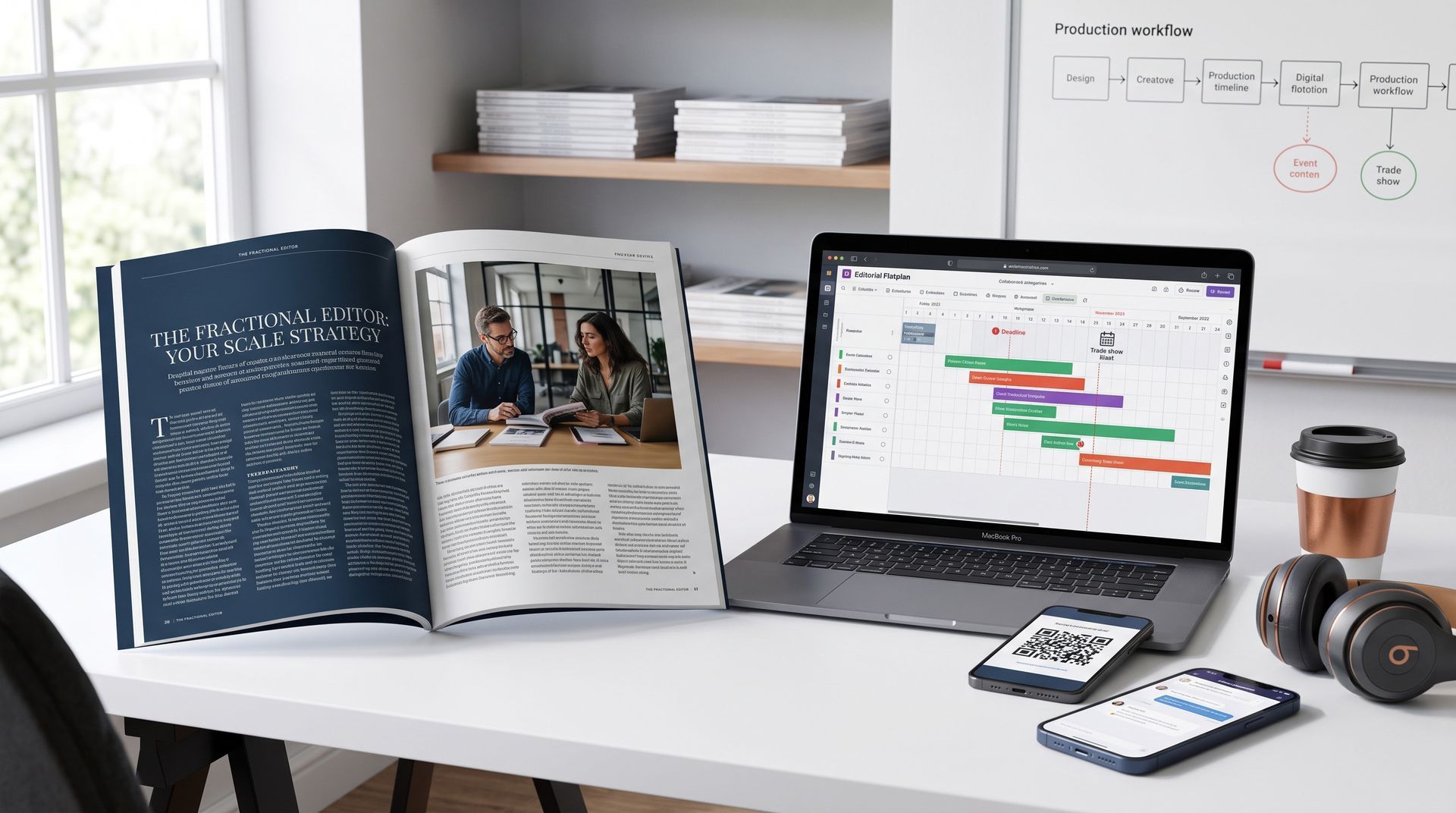
- Bridging the Rich Media Gap: Rich media is handled with dual-purpose elegance. For instance, where a digital issue features a playable, hyperlinked YouTube video, the print version displays a high-resolution screenshot of the video overlaid with a "play" icon and a paired QR code. The print reader scans the page with their smartphone to watch, while the digital reader simply taps the screen. One layout, two flawless user journeys.
By deploying a hybrid issue strategy, you achieve maximum operational efficiency. You design once, but deploy twice—delivering a flawless, static deep dive to your print audience while instantly serving a connected, quick-read experience to digital users from the exact same asset base.
4. The Financial Case: Scalable, Flexible Assets vs. Fixed Overhead
Many publishers hesitate to look for professional design services because they fear a massive financial commitment. They assume outsourcing means signing high-cost retainers or taking on fixed overheads.
In reality, partnering with an independent media design collective offers the ultimate operational flexibility:
- No Fixed Salaries: You gain access to a powerhouse team of veteran publication designers and production artists without the burden of full-time employee overheads, pensions, or hardware costs.
- Pay-as-You-Go Margins: Your production costs scale exactly with your magazine's architecture. If you run a quarterly issue or a lean, small-run print schedule, your production fees align precisely with that cycle. Your overhead stays completely variable, keeping your margins incredibly healthy.
The Verdict: Transitioning from Layout Artist to Media Publisher
Outsourcing your magazine or newspaper layout isn't an admission that you lack the skills; it is a strategic business decision that realises your true value. It frees your time to focus on building a multi-channel revenue engine, safe in the knowledge that your print assets are being engineered to flawless, commercial standards.
By shifting production to a dedicated collective, you build your business on a proven, scalable foundation. You stop fighting the software, and you start scaling your brand.
The post 'In-House vs. Outsourced Magazine Production: The Real Cost of Doing It Yourself' appeared first on
The Magazine Production Company.
Click here to go back to the main articles page.
Share this content!
Read more of our articles