
TUNE INTO OUR PODCAST
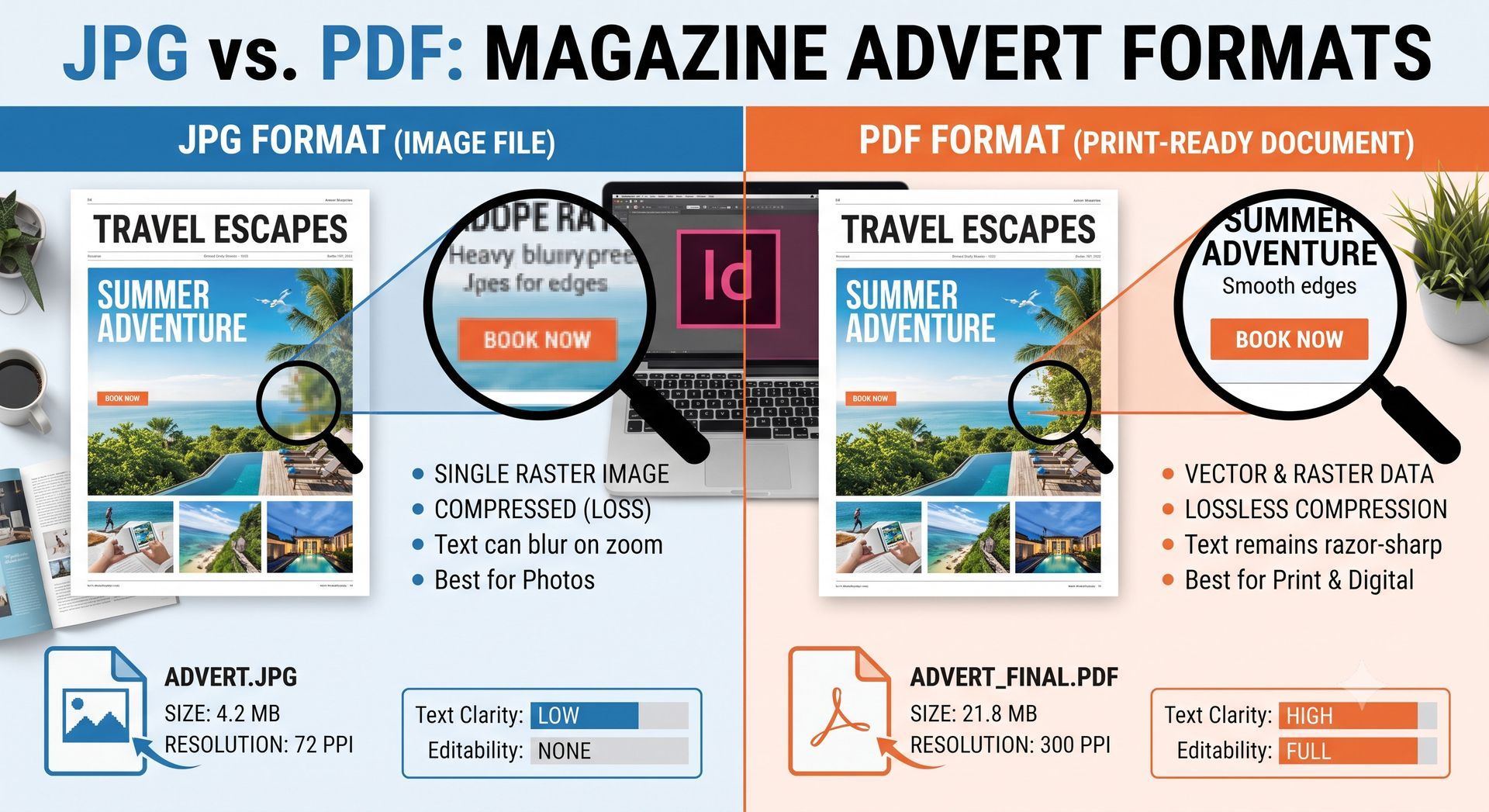
Every few years, the publishing world gets swept up by a new “magic bullet.” Thirty years ago, people thought having a computer made them an instant designer — ignoring the fact that they didn’t know the difference between RGB and CMYK, or DPI and PPI. Even today, many do not understand trim marks and bleed.
Today, it’s the AI bandwagon.
The narrative out there is simple, seductive, and totally wrong: “AI can generate text and create images in seconds. Surely, magazine production is dead. You just copy and paste into columns, don’t you?”
If only it were that simple.
The Illusion of ‘Free and Fast’
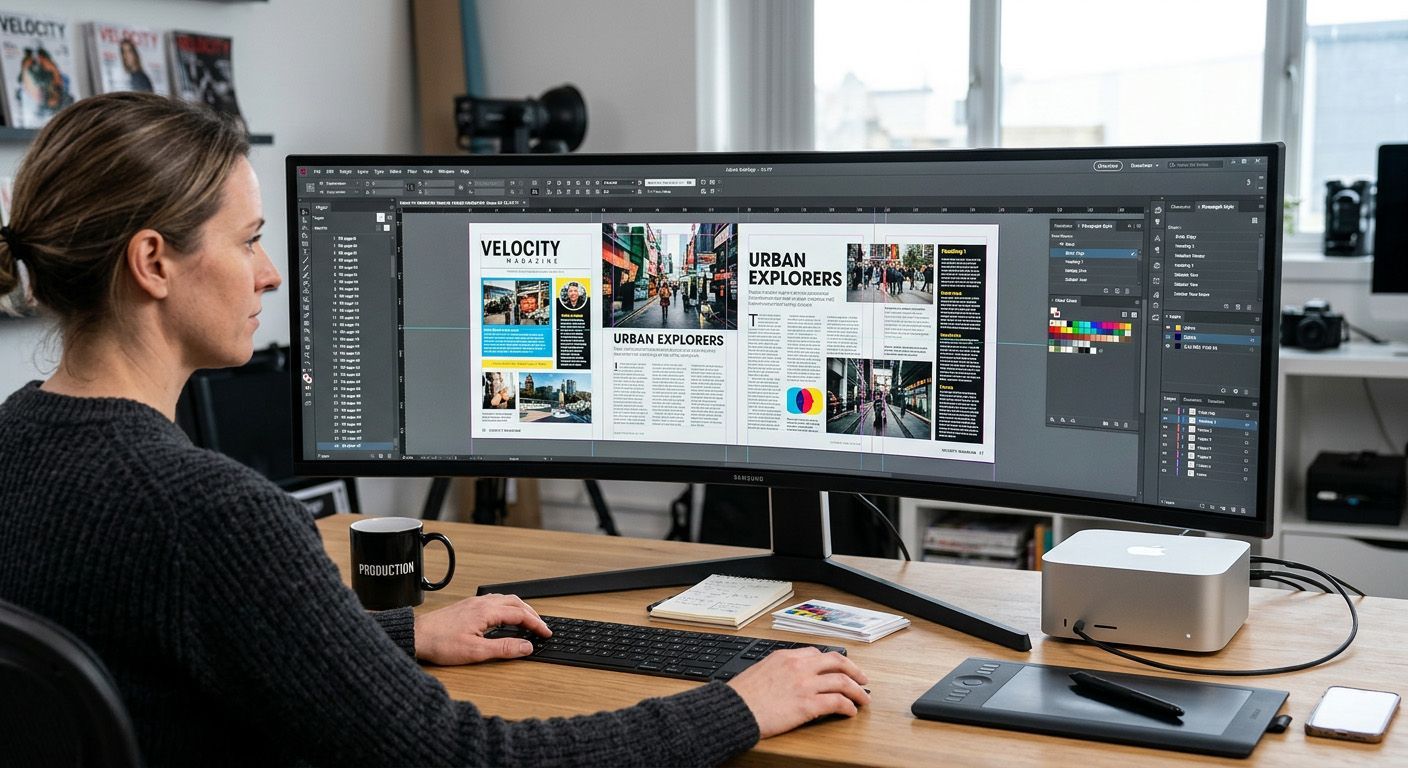
Let’s address the elephant in the room: speed and cost. Yes, AI tools have advanced at an eye-watering speed. However, wind back to the mid-nineties: it took two in-house magazine artworkers and a part-time freelancer three weeks to design pages, driving back and forth armed with SyQuest disks to the repro house, just to get a 100-page issue ready before the TNT courier arrived to take film to the printers 300 miles away. There was no internet connection available back then.
Today, using advanced tools, techniques, the right hardware, and years of instinct, an experienced production artist can deliver that same issue single-handedly in about a quarter of the time.
But when a process takes less time due to expertise and better tools, the value doesn’t decrease — it increases. You aren’t paying for several days of mouse clicks; you are paying for the 30 years it took to learn how to do it flawlessly within a refined timescale. Today, while a production artist produces pages at speed, they are doing so with confidence, accuracy, and ironing out issues along the way. This is today’s standard. The DIY, ‘free-and-fast’ approach usually translates directly into ‘sloppy and substandard,’ especially if commercial printing is involved later in the process.
Where AI Drops the Baton: The Human Logic
Don’t get me wrong, AI is a brilliant co-pilot, but only if you know how to use it correctly. It’s fantastic for shoring up production — correcting grammar, creating tables from PNG files (if the resolution is good enough), or attempting to upscale and improve the definition in low-resolution images (blowing up a balloon that’s already full of holes springs to mind).
But despite AI’s abilities, it doesn’t have an eye for aesthetics, it cannot consistently keep your brand guidelines and font styles in mind, and it certainly doesn’t have instinct or communicate foresight.
Publishers should tread carefully when seduced by automated, "text-to-design" platforms like Lovart AI. Tellingly, there isn't a single live, multi-page example on their site to view. While they promise flawless layouts in seconds, they fail to deliver on three critical fronts: they cannot manage the shifting commercial logic of a live flatplan; they lack the technical empathy required for precision, global changes, typography, and accessibility; and they cannot guarantee the rigorous pre-flight standards required for commercial print output. Those are just a few issues of the many I could mention.
If ever there were a scenario in which publishers could swap a professional for AI in publication production, they would likely trade guaranteed delivery for an endless loop of trial and error — a hidden tax on your own time that is conveniently left out of the marketing text.
Magazine production requires human logic that typing prompts into a chat box simply cannot replicate:
- Chatting with AI vs. Chatting with a PA (Production Artist): Relying on automated tools to construct pages is only as good as the input you provide. The likelihood is that it will be a game of trial and error, with the crucial technical translation missing for a final product that needs to be visually and technically flawless. Without an experienced eye gearing the file for the actual output device, you end up with inaccurate copy positioning that disrupts reading flow, colour choices across a spread that actively fight each other, and imported iPhone images that are unprepared for your final media output intent — leaving them muddy, under-exposed, and with amateur-like positioning. If that happens on a simple page, imagine the mess when translated into more complex layouts.
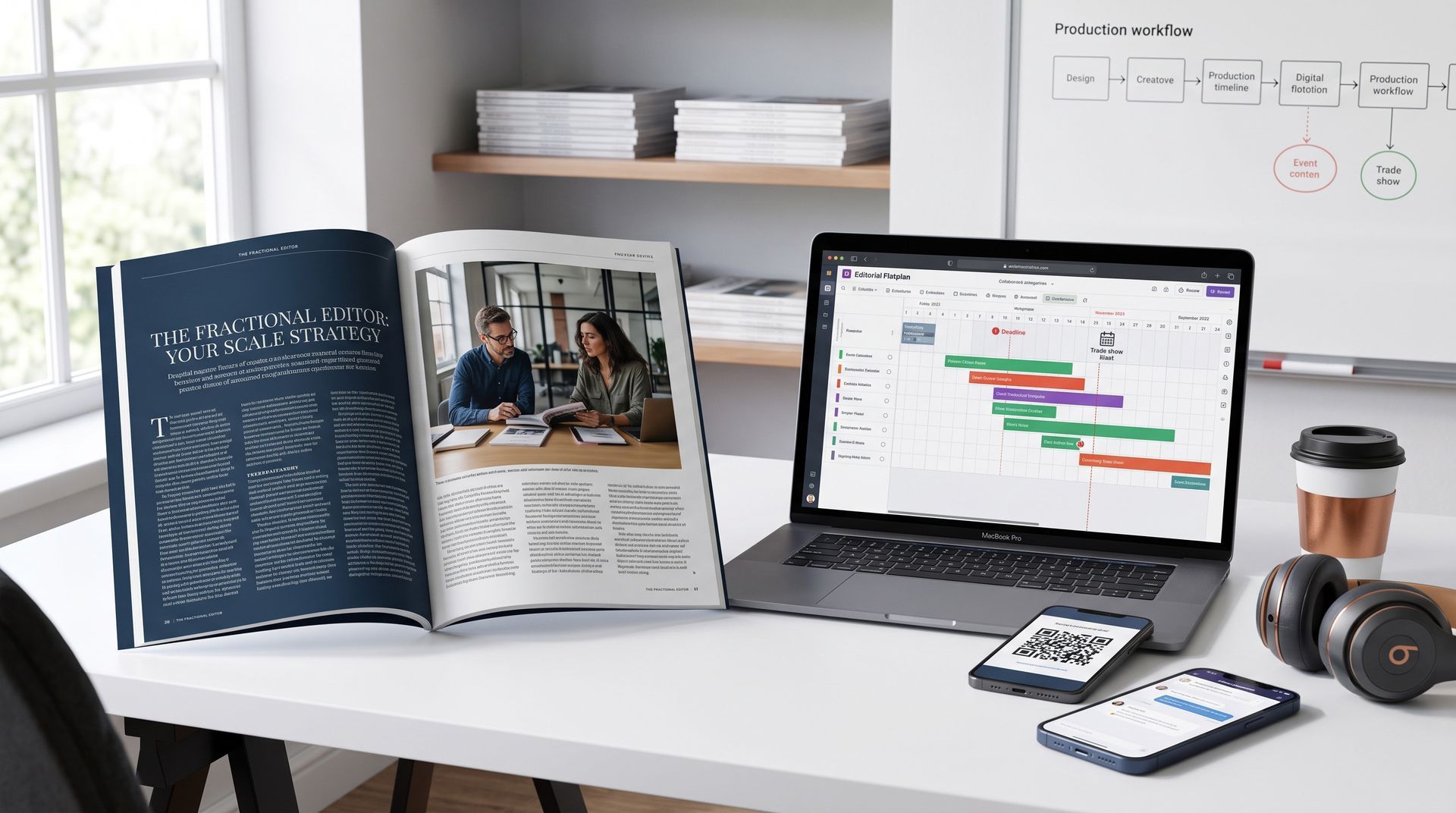
- Commercial Strategy: AI doesn’t tune into your relationship management. It has no grasp of internal agreements made with advertisers to protect key, premium positioning, nor does it know how to correctly place specific sponsor or contributor assets agreed during the sales process. Instead of getting it right the first time, it could miss reserved positions for your highest-value advertisers. Could AI be linked to a flatplan, watching the editor make changes on the fly? Not a chance.
- Accessibility: A professional designs with empathy, ensuring typography is coherent and readable for individuals who are visually challenged or dyslexic. While AI attempts to fill space with your copy, it then leaves you to spot and fix readability issues manually through endless iterations — and this could be just one page from the many in the issue. Let’s not forget this would apply to adverts too.
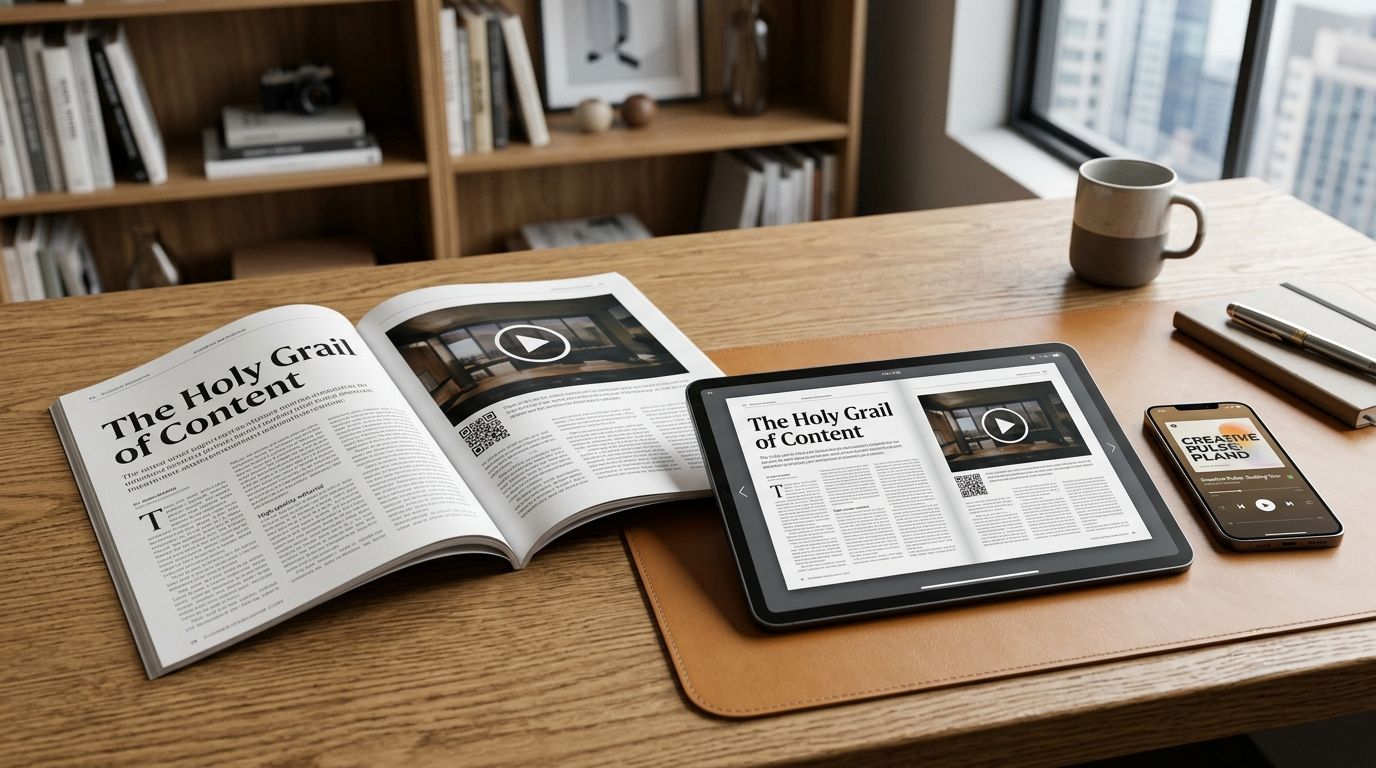
- The Invisible Digital Plumbing: When building interactive digital issues, every single QR code, video coding, web, and email addresses must be hyperlinked, verified, and strategically placed. A professional ensures the digital edition is rock-solid before publication, rather than leaving the publisher to find and fix broken links after it goes live.
The Permanent Cost of a "Quick Fix"
But here is the real danger: '…it was published online'. Once a substandard issue or artwork is uploaded, Google’s search engines scrape and index it. It gets cached. When potential new readers and sponsors search for that company, that broken, unaligned, amateur piece of artwork is the very first thing they see. And once Google indexes a mistake, you can’t just wave a magic wand and erase it from the web. It is critical to get it right the first time, every time.
The Publisher’s Peace of Mind
The real value of a professional production partnership is silence. No endless back-and-forth, no missed deadlines, and no technical panic. When you hand copy over to an expert, it is handled within budget and delivered before the deadline is even in sight. That communication silence allows publishers and editors to focus on what they actually need to be doing: building relationships with advertisers, driving business strategy, and creating great content.
AI is an incredible synthesizer, but it still needs a conductor to create a symphony. Without that experienced eye, you aren’t saving money — you’re gambling with your brand’s reputation, and it's a gamble that is unlikely to pay off.
#MagazinePublishing #aipublishing #aimagazineproduction #magazineproduction #PublishingIndustry #MediaPublishing #magazineeditor #IndependentPublishing #PrintProduction #AIMagazineDesign #AIGraphicDesign #Typography #PreFlight #ArtworkProfessionals #AIdesigner #AIadobeindesign #MagazinePublishing #PrintProduction #AIInDesign #lovartai
The post 'The Symphony vs. The Synthesizer: Can AI Design a Magazine?' appeared first on
The Magazine Production Company.
Click here to go back to the main articles page.
Share this content!
Read more of our articles